January 2026
Learning Machine Learning in Public
Treating the transition into AI and machine learning as an engineering practice creates momentum, clarity, and honest feedback loops.
From curiosity to structure
It is easy to consume AI content passively and mistake that for progress. Real growth starts when learning becomes structured enough to produce artifacts: notes, experiments, repos, and questions worth revisiting.
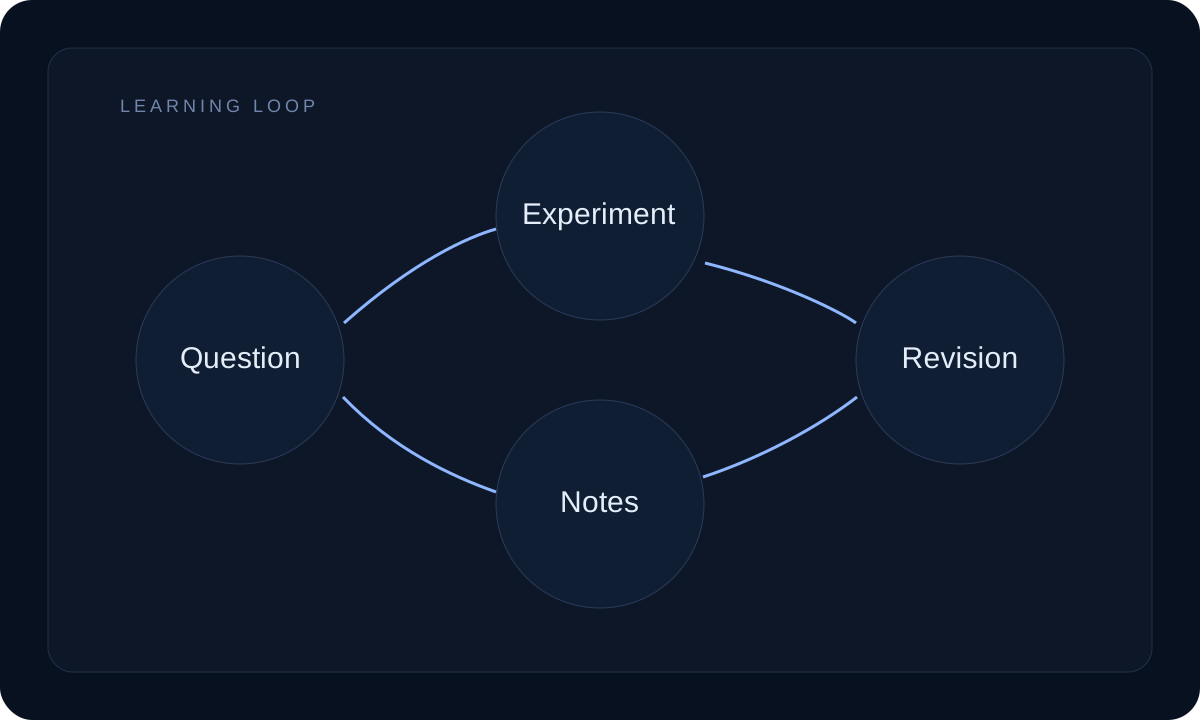
- Keep notes that capture what changed and why.
- Turn curiosity into small experiments.
- Explain concepts clearly enough that weak assumptions show up.
Engineering habits still matter
The same habits that make software projects better also improve ML learning: versioning work, keeping experiments reproducible, documenting tradeoffs, and measuring outcomes instead of relying on impressions.
const run = { dataset: "v3-cleaned", model: "baseline-mlp", metric: "validation_loss", learningRate: 0.001, result: 0.184,};That continuity is one reason the transition feels natural. Good engineering discipline transfers well into model work.
A practical path forward
My focus is to keep the path grounded in fundamentals: probability, optimization, model behavior, data quality, and evaluation. I want depth, not just surface familiarity with tools.
Optimization idea
theta_(t+1) = theta_t - eta * gradient(L(theta_t))
What matters is the habit behind it: define the objective, measure the error, and update with intention.
Publishing what I learn helps turn ambition into an accountable process. It keeps the transition real.
Continue
Read more notes or start a conversation.
If this article was useful, you can explore more writing on engineering and AI/ML, or reach out directly through the contact page.